
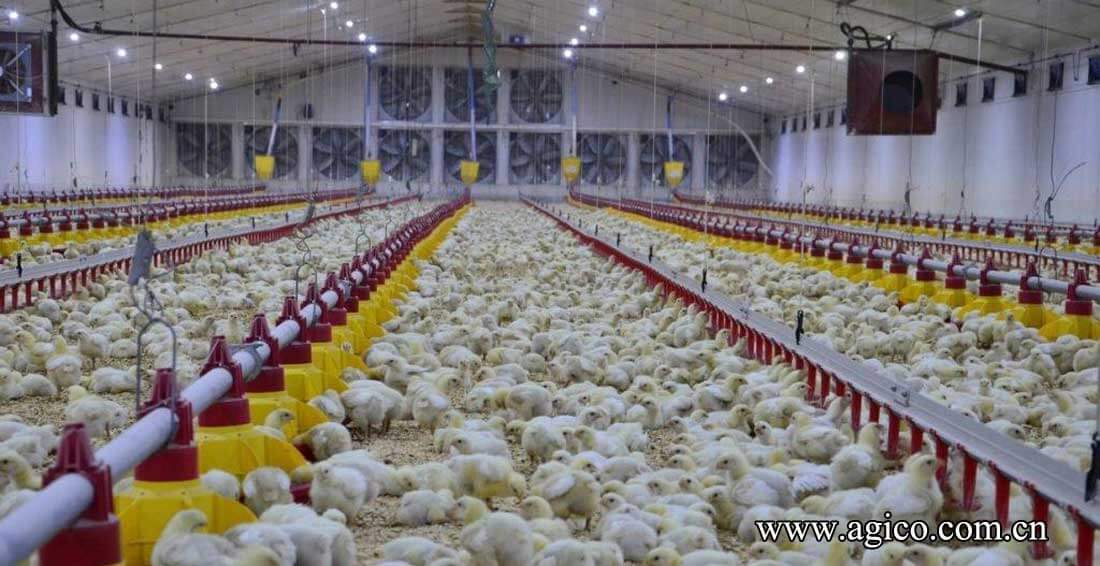
AGICO provides deep litter poultry house equipment and integrated solutions for commercial broiler farms and cage-free layer farms. Our systems include automatic pan feeding, nipple drinking, feed storage and conveying, ventilation and cooling, heating, and climate control. These systems help poultry farms automate feeding and manage the house environment.AGICO provides deep litter poultry house equipment and integrated solutions for commercial broiler farms and cage-free layer farms. Our systems include automatic pan feeding, nipple drinking, feed storage and conveying, ventilation and cooling, heating, and climate control. These systems help poultry farms automate feeding and manage the house environment.
Whether you are building a new commercial poultry farm or upgrading an existing floor-rearing house, AGICO can recommend suitable equipment combinations and installation layouts based on flock size, house dimensions, local climate, and automation requirements.
What Is a Deep Litter Poultry House?
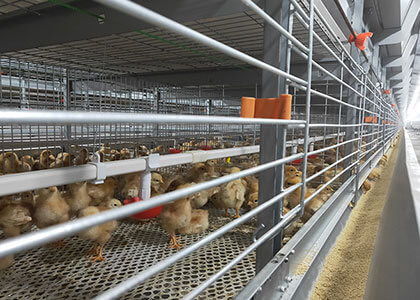
A deep litter poultry house is a cage-free housing system in which birds are raised on a floor covered with bedding materials. Common materials include rice husks, wood shavings, and chopped straw. Instead of being confined in conventional cages, birds can move freely inside the house to eat, drink, walk, and rest. The litter absorbs some moisture and provides a relatively soft surface for the birds.
This deep litter system of poultry housing is widely used in commercial broiler production and can also be used for layer and some breeder flocks. Unlike broiler floor rearing, deep litter houses for layers also need to be equipped with nest boxes, perches, and suitable egg collection facilities according to production requirements.
Modern commercial deep litter houses are generally equipped with automatic feeding, drinking, ventilation, and climate control systems to reduce manual feeding work and maintain suitable indoor conditions. Because birds have direct contact with the floor litter, preventing water leakage, controlling humidity through ventilation, and maintaining the litter are important considerations in house design and equipment selection.
Deep Litter Poultry House Equipment
Commercial deep litter poultry houses are generally equipped with automatic feeding and drinking systems, feed storage and conveying equipment, ventilation and cooling, heating, and climate control. AGICO can provide suitable equipment combinations based on flock size, house dimensions, and local climate to support automatic feeding and indoor environment management.
Automatic Pan Feeding System
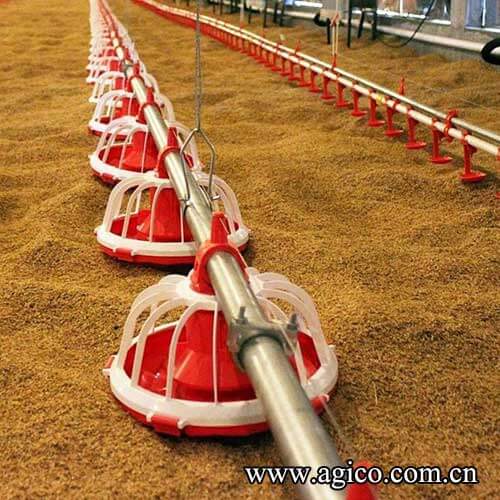
An automatic feeding line conveys feed to individual pans throughout the poultry house. This system is suitable for broilers and other floor-reared poultry.
- Reference specifications: 330 mm PP feed pan, 14–16 compartments, approximately 40–70 birds per pan.
- Optional configurations: The number of feeding lines and pans, as well as the suspension and height-adjustment system, can be selected according to house dimensions and flock size.
Get Price Now!
Automatic Nipple Drinking System
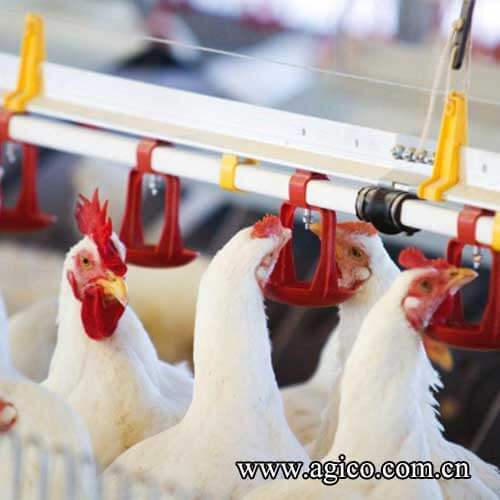
The suspended drinking line is equipped with nipple drinkers, filtration, and water-pressure regulation. The line height can be adjusted as the birds grow.
- Reference specification: Approximately 8–12 broilers per nipple drinker.
- Optional configurations: The number of drinking lines, nipple drinkers with or without drip cups, and manual or powered winch systems can be selected to suit the project.
Get Price Now!
Feed Silo and Conveying System
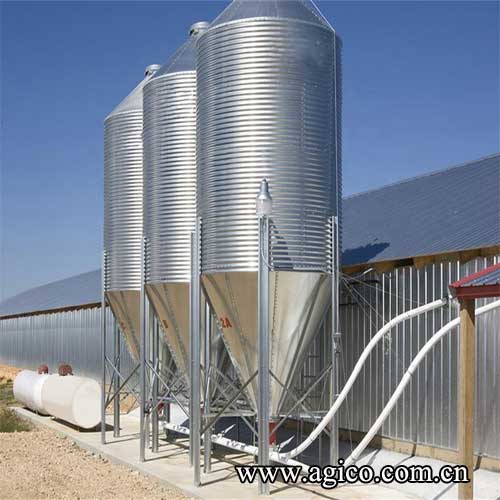
Feed silos are installed outside the poultry house. An auger conveying system transfers feed from the silo to the feeding equipment inside the house.
- Capacity selection: Silo capacity is determined by flock size, daily feed consumption, and the required replenishment interval.
- Optional configurations: Options include a separate silo for each house or centralized feed storage for multiple houses, together with the required conveying lines.
Get Price Now!
Ventilation and Cooling System
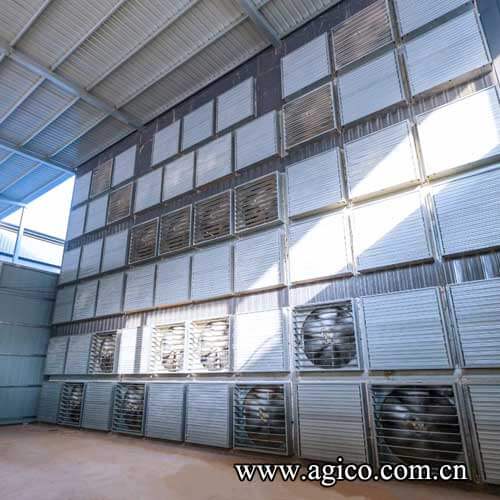
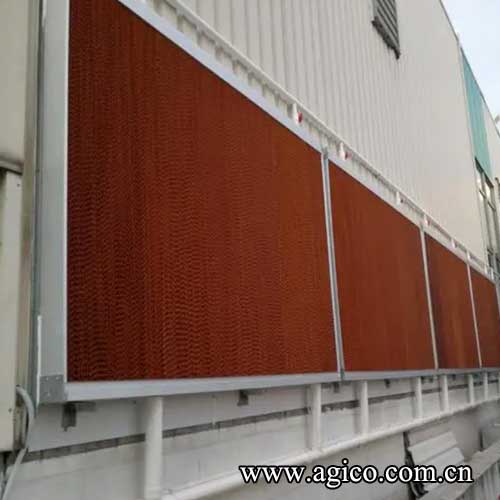
Fans, air inlets, and cooling pads help regulate airflow, temperature, and humidity inside the poultry house.
- Ventilation options: Designs may include mechanical minimum ventilation and tunnel ventilation.
- Optional configurations: Exhaust fans with different air capacities, air inlets, and evaporative cooling pads can be selected according to the local climate and house structure.
Get Price Now!
Poultry Heating System
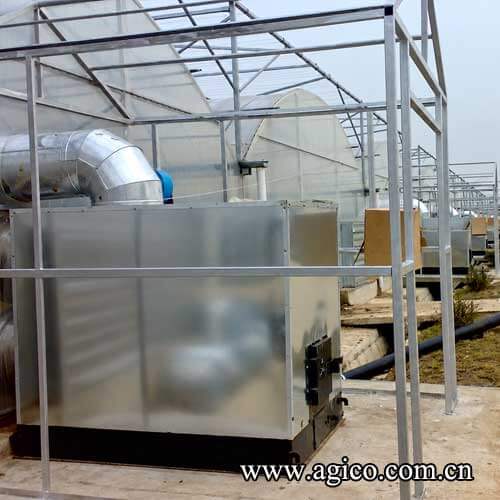
The heating system provides the heat required during brooding and in cold weather, helping maintain suitable temperatures inside the poultry house.
- Heating options: Depending on project conditions, the house can use localized brooding heaters or a whole-house heating arrangement.
- Configuration: Heater type, heating capacity, and installation quantity are determined by house area, insulation, and available energy sources.
Get Price Now!
Climate Control System
Sensors and an automatic controller coordinate the operation of fans, cooling pads, and heating equipment.
- Basic configuration: Temperature and humidity monitoring, with automatic control of fans and heating equipment.
- Optional functions: Static-pressure monitoring, staged ventilation control, alarms, and remote monitoring can be added according to project requirements.
Get Price Now!
Deep Litter Poultry House Layout
A well-planned deep litter poultry house layout should take flock size, equipment installation, airflow, and daily management into account. AGICO can plan the installation positions of feeding, drinking, ventilation, and auxiliary equipment according to house dimensions and farming requirements.
Determine the house area based on flock size, target market weight, and applicable stocking-density requirements. Allow sufficient space for equipment installation and daily operations.
Feeding and drinking lines are generally arranged lengthwise in parallel and in an alternating layout, allowing birds convenient access to feed and water. The number and spacing of lines depend on house width and flock size.
Position air inlets, exhaust fans, and cooling pads appropriately. In a tunnel-ventilated house, air usually enters at one end and is exhausted at the opposite end. Ventilation requirements in different seasons should also be considered.
Feed silos are usually located outside the poultry house for convenient delivery and refilling. Water supply, power, and control equipment should be placed where they are easy to operate and maintain.
Provide sufficient access and service aisles for equipment inspection, litter removal, house cleaning and disinfection, and turnaround between flocks.
Recommended House Sizes and Equipment Configurations
Planning the size of a deep litter poultry house usually starts with the target flock size, but bird numbers alone do not determine the required floor area or equipment configuration.
Before designing the house, consider the bird breed, target market weight, applicable live-weight stocking density, local climate, and ventilation capacity to determine the required floor area. For a commercial broiler project, estimate the total live weight from the planned number of birds and target market weight, then calculate the effective floor area using the applicable stocking-density requirements.
Required effective floor area = Planned total live weight at market age ÷ Design live-weight stocking density
Based on this calculation, the house length and width, number of feeding and drinking lines, and the ventilation, heating, and control equipment can then be determined.
The feed pan quantities below are estimated at 40–70 birds per pan, while nipple drinker quantities are estimated at 8–12 broilers per nipple. These are preliminary ranges, not final purchasing quantities. The following table provides initial planning examples for three common flock sizes.
Reference Configurations for Different Flock Sizes
| Item | 5,000 Birds | 10,000 Birds | 20,000 Birds |
|---|---|---|---|
| Illustrative floor area | 450 m² | 930 m² | 1,800 m² |
| Feeding lines | 3 | 3 | 4 |
| Feed pans | 72–125 | 143–250 | 286–500 |
| Drinking lines | 2 | 2 | 5 |
| Nipple drinkers | 417–625 | 834–1,250 | 1,667–2,500 |
Need a different flock size?
Share your planned flock size, house dimensions, and project location. AGICO can further assess the required equipment quantities and installation layout.
Get a Quotation10,000-Broiler Deep Litter House Design Example
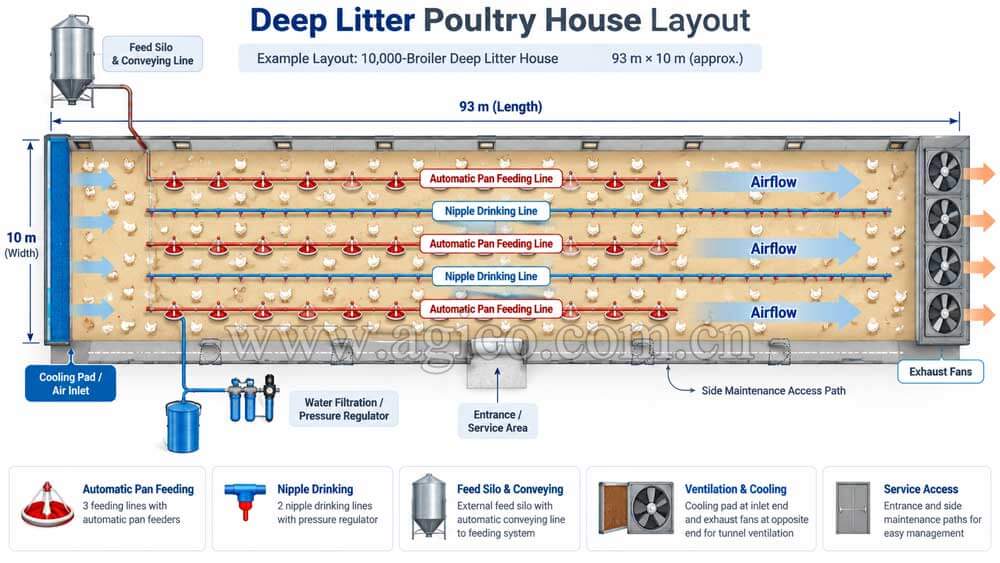
For a deep litter poultry house designed to accommodate 10,000 broilers, a reference layout may use a house measuring approximately 93 m × 10 m. The system can include automatic pan feeding lines, nipple drinking lines, and supporting feed storage, ventilation and cooling, heating, and climate control equipment.
Three automatic feeding lines and two drinking lines are arranged lengthwise in an alternating layout. The feed silo is installed outside the house and connected to the indoor feeding system through conveying pipes. For a tunnel-ventilated design, air inlets and exhaust fans can be arranged at opposite ends of the house, with cooling pads added according to local climate conditions.
The feed pan quantity is estimated at 50 broilers per pan, and the nipple drinker quantity at 10 broilers per nipple.
Reference Equipment Configuration
| Item | Reference Configuration |
|---|---|
| Flock size | 10,000 broilers |
| Reference house dimensions | 93 × 10 × 3 m |
| House floor area | Approximately 930 m² |
| Automatic feeding system | 3 feeding lines, approximately 200 feed pans |
| Nipple drinking system | 2 drinking lines, approximately 1,000 nipple drinkers |
| Feed storage and conveying | External feed silo and automatic conveying system |
| Ventilation and cooling | Exhaust fans, air inlets, and cooling pads as required |
| Heating system | Configured according to brooding requirements and local climate |
| Climate control | Temperature and humidity monitoring, with automatic ventilation and heating control |
Equipment Considerations for Broilers and Layers
The deep litter system can be used for both broilers and some layer operations, but their production objectives differ. As a result, equipment selection and poultry house layouts also need to be adjusted.
Broiler houses are mainly equipped for brooding, growth, and flock management through to market age. Layer houses require additional facilities for egg production, perching, and egg collection, in addition to daily feeding and environmental management.
| Equipment / Configuration | Broiler Deep Litter House | Layer Deep Litter House |
|---|---|---|
| Feeding system | Automatic pan feeding is commonly used, with line and pan density adjusted for the growth stage. | Select feeder troughs or other suitable feeding systems according to layer feeding requirements. |
| Drinking system | Adjustable nipple drinking lines can be raised as broilers grow. | Arrange drinking equipment according to the birds' activity areas and production layout. |
| Nest boxes | Not required. | Required to support group nesting and egg laying. |
| Perches | Generally not included as a standard configuration. | Configure according to the requirements of the layer housing system. |
| Egg collection equipment | Not required. | Manual or automatic egg collection systems can be selected. |
| Ventilation and lighting | Focus on temperature, ventilation, and brooding management. | Consider long-term ventilation, lighting for egg production, and indoor climate management. |
For layer projects, a floor-rearing layout that combines partially slatted flooring with litter areas can also be considered, depending on project requirements. A multi-tier aviary system is another cage-free option. AGICO can recommend suitable equipment combinations and poultry house layouts based on bird type, production scale, and management practices.