How to Manage Deep Litter in Commercial Poultry Houses
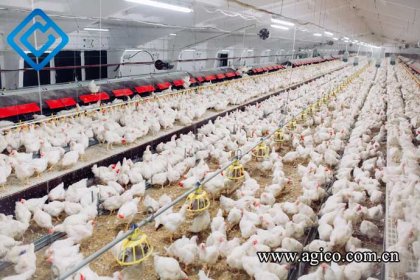
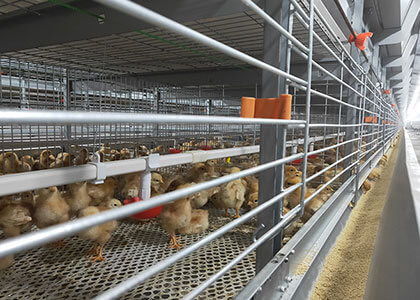
Deep litter farming is widely used in commercial broiler houses and some cage-free layer houses. Bedding materials such as wood shavings, rice husks, and chopped straw provide a comfortable surface for chickens while absorbing moisture from droppings and drinking water.
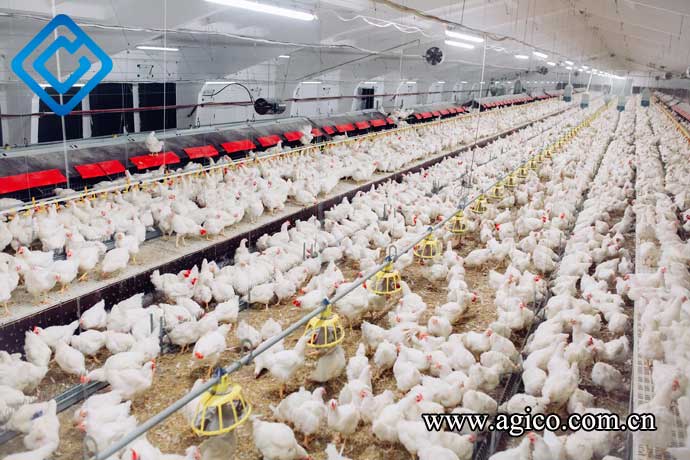
Effective deep litter management requires more than choosing suitable bedding materials. Proper ventilation, reliable drinking systems, regular inspections, and timely maintenance are essential for keeping litter in good condition.
How to Prepare Deep Litter Before Placing Chickens
Good litter management starts before the birds arrive. Bedding materials, floor conditions, and initial litter depth all affect long-term performance.
1. Choose Suitable Bedding Materials
Common poultry bedding materials include wood shavings, rice husks, and chopped straw. Each has different moisture absorption, dust levels, and handling requirements.
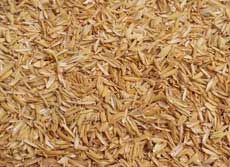
Rice husk
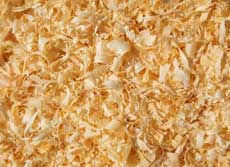
Sawdust
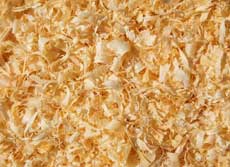
Wood shavings
| Bedding Material | Main Features | Considerations |
|---|---|---|
| Wood Shavings | Good moisture absorption and cushioning; commonly used in broiler houses | Use dry, untreated wood and avoid excessive dust |
| Rice Husks | Widely available in rice-producing regions and easy to spread | Absorption varies by material quality; monitor moisture and caking |
| Chopped Straw | Readily available and often economical in agricultural regions | Must be dry and properly chopped to prevent matting and compaction |
When selecting bedding, consider local availability, moisture absorption, cost, and ease of removal. Avoid moldy, rotten, chemically contaminated, or excessively dusty materials.
2. Prepare the Poultry House Floor
Before spreading litter, clean, disinfect, and thoroughly dry the poultry house floor.
Check the following:
- Remove standing water and correct drainage problems.
- Repair leaks in the roof, walls, and water pipes.
- Level uneven floors where water may collect.
- Inspect feeding, drinking, and ventilation equipment.
New poultry houses should also have adequate floor moisture protection to prevent groundwater from entering the bedding. During cold-weather brooding, preheat the house before chick placement. Both the floor and litter should reach suitable temperatures, as a cold floor can contribute to condensation and damp bedding.
3. Determine the Right Litter Depth
Litter depth depends on the bird type, bedding material, floor structure, and production cycle. For some commercial broiler houses, an initial depth of approximately 5–10 cm may be suitable. However, wood shavings, rice husks, and straw have different densities and absorption capacities, so the required depth may vary.
Additional bedding can be added when necessary, but litter should not be continuously topped up on a fixed schedule without checking the moisture and condition of the existing layer.
How to Keep Deep Litter Dry During Poultry Production
Moisture is one of the main challenges in poultry litter management. It comes from bird droppings, leaking drinkers, humid air, and water entering through the floor or building structure. When moisture accumulates faster than it can evaporate, litter becomes wet, compacted, and caked. Effective moisture control depends on ventilation, drinking systems, and overall house management.
1. Maintain Proper Ventilation
Ventilation removes excess moisture, ammonia, and other gases while helping control house temperature.
Poor airflow allows humidity to build up, increasing the risk of wet poultry litter. Ventilation rates should therefore be adjusted according to bird age, body weight, flock size, and outdoor conditions.
Pay particular attention to the following:
- Cold weather: Reducing ventilation helps conserve heat, but insufficient fresh air allows moisture and ammonia to accumulate. Maintain adequate minimum ventilation and provide heating when necessary.
- Hot and humid weather: High outdoor humidity can limit moisture evaporation. Ventilation, cooling, and humidity control must work together.
- Uneven airflow: Poor air distribution can leave corners and sidewall areas damp. Proper inlet and exhaust fan placement helps prevent these problems.
For some commercial broiler houses, 50%–70% relative humidity is a useful reference range. Actual targets should reflect bird age, temperature, outdoor conditions, and litter quality.
2. Prevent Water Leakage from Drinking Systems
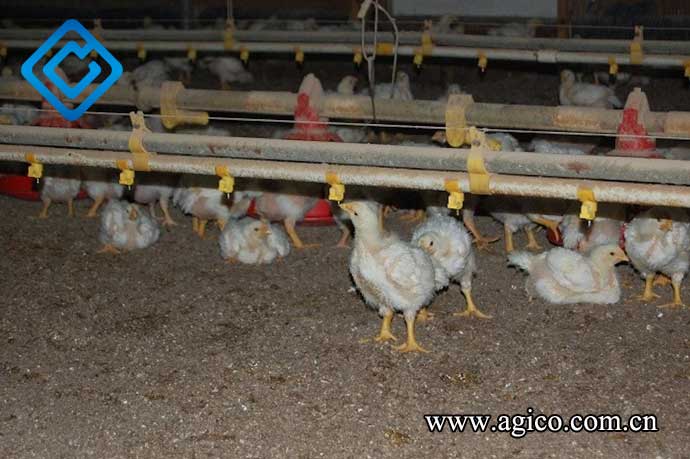
Drinking equipment has a major influence on litter moisture. Commercial floor-rearing houses commonly use automatic nipple drinking systems. When properly installed and maintained, they help control water delivery and reduce spillage compared with open drinking troughs. However, incorrect drinking line height, excessive water pressure, or damaged nipples can cause continuous dripping.
3. Control Stocking Density and House Conditions
Stocking density affects the amount of manure and moisture deposited per square meter.
Higher stocking densities generally increase the load on ventilation and litter management systems. Even when overall density meets design requirements, uneven temperature, lighting, or airflow may cause birds to gather in certain areas, leading to localized litter compaction.
Stocking density should be determined according to bird type, target weight, equipment layout, ventilation capacity, and local requirements.
In houses with evaporative cooling pads, inspect nearby floor areas for excess moisture. Bird health, feed formulation, and abnormal water consumption can also affect manure moisture. If litter suddenly becomes wet across large areas without obvious equipment problems, investigate possible health or nutritional causes.
How to Inspect and Maintain Deep Litter Daily
Regular inspection is essential for maintaining a healthy deep litter system. Farmers should identify moisture and caking problems before they become widespread.
1. Check Litter Moisture and Texture
Good poultry litter should absorb moisture while remaining relatively loose and resilient. For commercial broilers, a moisture content of approximately 20%–25% is often considered a useful reference. However, suitable conditions vary with bedding materials and management practices.
A simple hand-squeeze test can help assess litter condition. Take a small amount of litter from different areas of the house, squeeze it gently, and release it.
- Too dry: The litter falls apart completely and produces excessive dust.
- Acceptable condition: The litter holds together slightly but breaks apart easily.
- Too wet: The litter forms a firm clump or releases noticeable moisture.
2. Remove Wet or Caked Litter
Small wet areas do not always require replacing all the bedding. However, the cause should be identified and corrected promptly.
If a drinking line leaks, repair it first. Then remove soaked or heavily caked litter and add clean, dry bedding where necessary. Slightly compacted litter may be loosened if it is not excessively wet or contaminated.
Avoid mixing heavily wet, moldy, or caked materials into dry litter. This does not eliminate the underlying problem and may increase dust and ammonia release. If caking repeatedly occurs across several areas, check ventilation, humidity distribution, drinking equipment, and stocking density rather than relying on frequent litter turning.
3. Inspect High-Risk Areas
Litter conditions are rarely uniform throughout a commercial poultry house.
Pay particular attention to:
- Beneath drinking lines: Water leakage and spillage.
- Around feeders: Heavy bird activity and litter compaction.
- Along sidewalls and corners: Poor airflow, condensation, or water penetration.
- Near air inlets and cooling pads: Local humidity and temperature differences.
- High-traffic areas: Greater manure accumulation and floor pressure.
For large commercial houses, these locations can be established as regular inspection points. Recording moisture, texture, caking, and odor changes helps identify developing problems.
Is Deep Litter Management Different for Broilers and Layers?
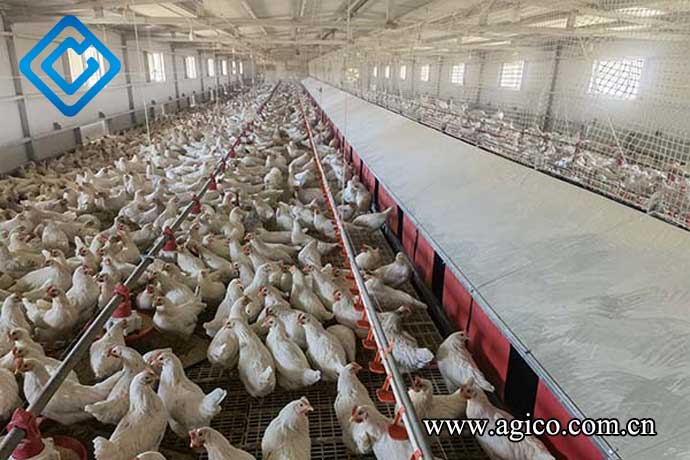
Both commercial broilers and cage-free layers can be raised on litter-covered floors. However, differences in production cycles, bird behavior, and equipment layout create different management requirements.
Deep Litter Management in Broiler Houses
Commercial broilers have relatively short production cycles and are commonly raised in batches. As birds grow heavier, manure and moisture loads increase. Litter caking, ammonia levels, and footpad health therefore require particular attention during later production stages.
Ventilation and litter management should be adjusted according to bird age and water consumption. After each flock, litter should be cleaned, replaced, or treated according to the farm's production system and biosecurity requirements.
Deep Litter Management in Layer Houses
Commercial laying hens have longer production cycles, making continuous litter maintenance especially important. Laying hens use litter for scratching, foraging, and dust bathing. Bedding must therefore remain reasonably dry and loose enough to support these natural behaviors.
Layer houses also require nest boxes, perches, feeding systems, drinking equipment, and egg collection facilities. Some cage-free layer houses combine litter-covered floors with partial slatted flooring. Feeding, drinking, or perching areas may be positioned over slats, allowing some manure to collect beneath the floor and reducing the load on litter areas. However, slatted flooring should not completely replace suitable litter areas where birds can perform natural behaviors.
| Management Item | Broiler Houses | Cage-Free Layer Houses |
|---|---|---|
| Production Cycle | Shorter, batch-based production | Longer laying period |
| Main Concerns | Moisture, caking, footpad health, air quality | Litter looseness, hygiene, dust bathing, air quality |
| Equipment Layout | Drinking lines, pan feeders, environmental control | Drinking, feeding, nest boxes, perches, optional slatted flooring |
| Litter Removal | Based on flock cycles and biosecurity requirements | Based on long-term management, house design, and hygiene |
When planning a deep litter poultry house, farmers should first determine the bird type and production system before selecting the floor structure, equipment layout, and litter management approach.
When Should Deep Litter Be Added, Replaced, or Removed?
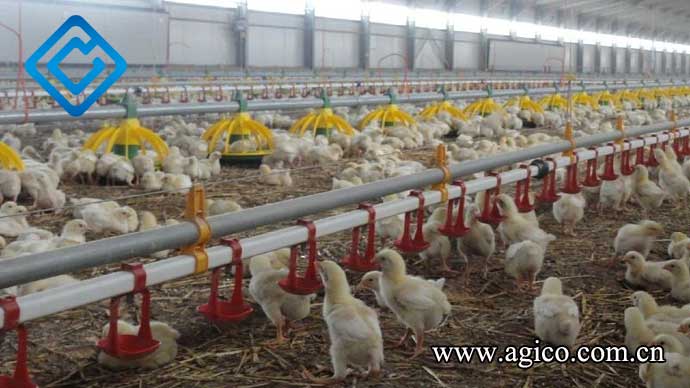
There is no universal litter replacement schedule for commercial poultry houses. Decisions should be based on bird type, litter condition, production cycle, and biosecurity requirements.
1. When Should Fresh Bedding Be Added?
Add clean, dry bedding when the existing layer becomes too thin or when litter has been removed from wet areas. Before adding new material, check whether the underlying litter is damp or caked. Covering heavily contaminated litter with fresh bedding does not eliminate hygiene risks. Litter depth should also be kept within practical limits, as excessive buildup may interfere with equipment height and floor management.
2. Can Poultry Litter Be Reused Between Flocks?
Some commercial broiler farms reuse litter between production cycles after appropriate treatment to reduce bedding consumption and disposal costs. However, litter reuse is not suitable for every farm. Decisions should consider the previous flock's health, litter moisture, pathogen control, downtime procedures, and local biosecurity regulations. Litter associated with certain disease outbreaks or serious contamination should be handled according to veterinary and biosecurity guidance rather than reused without proper treatment. Farms following a complete clean-out system should remove old litter after each flock, then clean, disinfect, dry, and prepare the house before adding fresh bedding.
3. How Should Used Poultry Litter Be Handled?
Used poultry litter contains manure, feathers, bedding, and feed residues. It also contains organic matter and nutrients that may be suitable for agricultural use after proper treatment. Depending on local regulations, used litter may be composted or processed into organic fertilizer.
However, untreated litter should not be dumped or stored where it may pollute the environment. Storage areas should provide protection against rain, seepage, and runoff to prevent soil and water contamination. For large commercial poultry farms, litter removal routes, transportation access, and temporary storage areas should be considered during the initial house design.
Plan the Right Deep Litter Poultry House for Your Farm
AGICO supplies commercial poultry farming equipment and cage-free poultry farming solutions, including automatic feeding systems, drinking systems, slatted flooring, and related equipment. A properly designed poultry nipple drinking system can also help reduce water spillage and support better litter moisture control. If you are planning a new broiler or cage-free layer house, share your bird type, flock size, house dimensions, and project location. Our team can recommend suitable equipment configurations and poultry house layouts based on your requirements.