Deep Litter Poultry Farming: How the System Works, Benefits and Requirements
What Is Deep Litter Poultry Farming?
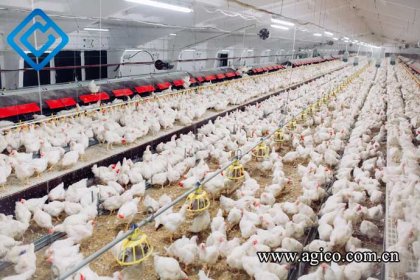
Deep litter poultry farming is a floor-based poultry housing method. Birds move directly on the poultry house floor, which is covered with a suitable layer of bedding. Common materials include wood shavings, rice husks and chopped straw.
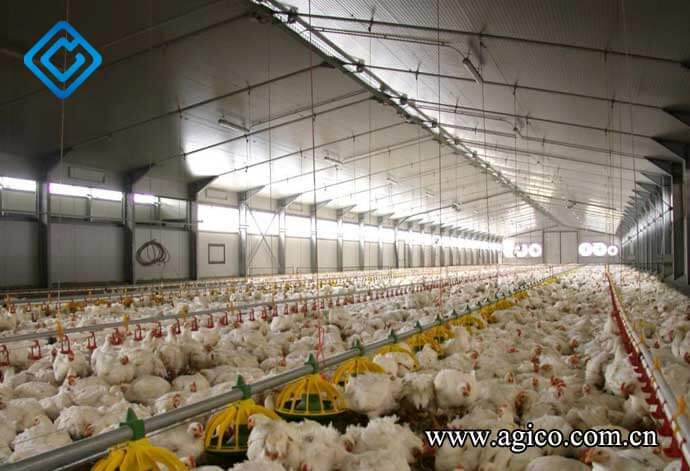
During production, the bedding absorbs some moisture and gradually mixes with droppings, spilled feed and feathers, forming a litter layer that requires ongoing maintenance. It provides a relatively soft surface for the birds, absorbs some moisture and helps reduce direct contact with the hard floor. Its effectiveness depends on material quality, ventilation and daily management.
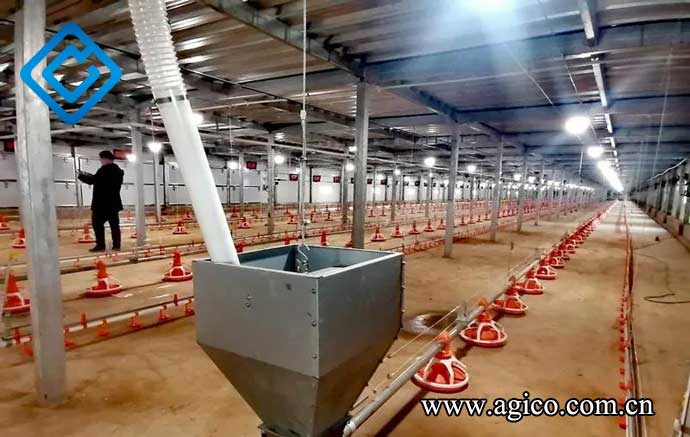
As a common deep litter system of poultry housing, this approach is suitable for commercial broiler production and can also be used in cage-free layer houses. Depending on the bird type and production requirements, the house can be equipped with automated feeding, drinking, ventilation and environmental control equipment.
The Deep Litter System should not be confused with the Free-Range System. Deep litter farming describes raising birds on a floor covered with bedding, while Free-Range generally requires access to an outdoor area. A poultry house using a deep litter system can therefore be a fully enclosed indoor building, without an outdoor run.
How Does the Deep Litter System in Poultry Farming Work?
The deep litter system in poultry farming relies on a bedding layer that provides a suitable floor surface for birds throughout the production period. Its operation involves several basic stages, from floor preparation and bird placement to litter maintenance and removal.
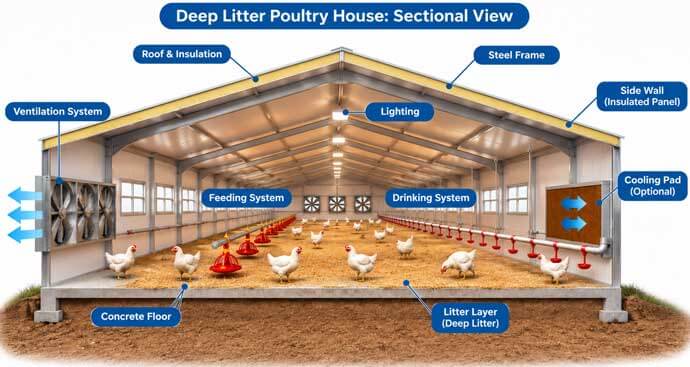
Preparing the Poultry House Floor
Commercial deep litter poultry houses generally have strong, level concrete floors with suitable moisture protection and drainage. Before the birds arrive, dry, clean bedding, such as wood shavings or rice husks, is spread over the floor. The initial bedding depth should be selected according to the material, climate and production requirements to provide a suitable floor surface for the birds.
Raising Birds on the Litter Bedding
Once chicks are placed in the house, they move directly on the bedding surface. As production continues, droppings gradually mix with the bedding, which absorbs some moisture and forms the litter layer used throughout the production period. Feeders and drinkers are generally positioned where birds can reach them easily. Moisture around the drinking equipment also needs to be controlled to prevent excessively wet patches of litter.
Maintaining the Litter Environment
Throughout production, the ventilation system needs to remove excess moisture and ammonia from the house, with temperature and ventilation rates adjusted to the growth stage of the flock. Litter condition should also be checked regularly. Drinker leaks and local caking need to be addressed promptly to keep the litter relatively dry and loose and provide a suitable environment for the birds.
Litter Removal and House Preparation
At the end of a broiler flock cycle, litter generally needs to be removed, treated or replaced according to its condition and hygiene requirements. The floor and associated equipment should then be cleaned and disinfected as needed, and suitable bedding laid before the next flock arrives. For layers and other birds with longer production periods, litter removal and replacement need to be scheduled around the actual production cycle and house management requirements.
Deep Litter Poultry Farming for Broilers and Layers
Deep litter farming is suitable for both broilers and layers, but the two production systems have different goals and housing layouts.
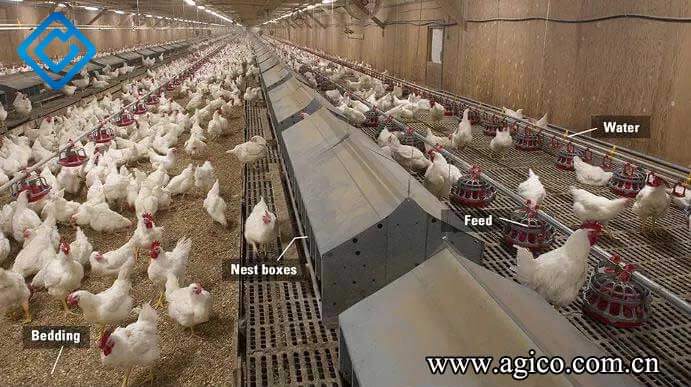
Broiler production focuses mainly on growth rate, feed conversion and time to market. Birds are generally raised in floor-based housing, where they move on the litter surface. Layer production places greater emphasis on egg production efficiency and natural bird behavior. Activity areas, nesting areas and egg collection facilities need to be planned to suit the production system.
The main differences between the two production systems are outlined below:
| Comparison | Broiler Farming | Layer Farming |
|---|---|---|
| Production Goal | Meat production | Egg production |
| Housing Type | Floor-based housing | Floor-based cage-free housing |
| Main Considerations | Growth, litter condition and footpad health | Egg production, nesting behavior and litter hygiene |
| Special Requirements | Suitable space for bird growth and movement | Nesting areas, perches and egg collection facilities |
Some cage-free layer houses also incorporate slatted flooring, separating part of the activity area from the litter area. This layout can be selected according to the house design and production requirements; it is not required in every deep litter layer system.
Benefits of Deep Litter Poultry Farming
Deep litter farming is a widely used floor-based housing method with several main benefits:
Greater Freedom of Movement for Birds
Birds can walk and move freely on the litter floor, giving them more space for natural movement than traditional cage systems.
Flexible Housing Structure
A floor-based poultry house layout can be planned flexibly around the flock size, bird type and production requirements, without installing traditional multi-tier cages.
Better Utilization of Poultry Litter
The waste formed by the mixture of droppings and bedding can be used as organic fertilizer after proper collection and composting, adding value to this by-product.
Suitable for Different Poultry Production
Deep litter systems can be used in both commercial broiler production and cage-free layer farming, making them suitable for a range of poultry operations.
Challenges and Limitations of Deep Litter Poultry Farming
Although deep litter farming offers several benefits, production results depend on bedding quality, the house environment and daily management. Farms considering this system need to be aware of the following potential challenges.
| Challenge | Explanation |
|---|---|
| Litter Moisture | Litter that remains wet for long periods can cake, lose its ability to absorb moisture and increase the risk of footpad damage. |
| Ammonia and Air Quality | The breakdown of nitrogen-containing compounds in chicken manure can release ammonia. Wet litter and inadequate ventilation can make this more likely to affect air quality in the house. |
| Disease and Biosecurity Risks | Litter that is used improperly or poorly managed over a long period can harbor pathogens and parasites, increasing risks to flock health and the spread of disease. |
| Bedding Material Availability | Deep litter farming requires a continuing supply of suitable bedding. In some regions, the availability, transport costs and quality of materials such as wood shavings and rice husks can limit farm operations. |
Deep litter farming is therefore not a management-free housing system. Farms need to assess local bedding supplies, housing facilities and their management capacity to determine whether it suits their production needs.
What Are the Requirements for Successful Deep Litter Poultry Farming?
Successful deep litter farming requires a suitable poultry house, appropriate bedding materials and adequate environmental control facilities. Together, these factors affect litter condition, flock health and production efficiency.
Suitable Poultry House Design
The poultry house should have a practical layout and sound construction. Floors are generally made of strong, level concrete, with moisture protection to reduce the effect of ground moisture on the litter. The roof and walls should provide suitable insulation, and drainage around the house should prevent rainwater from collecting or flowing inside.
Appropriate Litter Materials
Common deep litter bedding materials include Wood Shavings, Rice Husks and Chopped Straw. These materials differ in moisture absorption, particle size, cost and availability. Choose materials that are dry, clean, free from visible mold and suitable for the birds.
Effective Ventilation and Environmental Control
An effective ventilation system is essential for maintaining air quality and controlling litter moisture. Ventilation capacity should be designed around the number and weight of the birds, the climate and the house structure. In hot regions, tunnel ventilation and evaporative cooling pad systems can be considered according to local climate conditions to help control the indoor temperature.
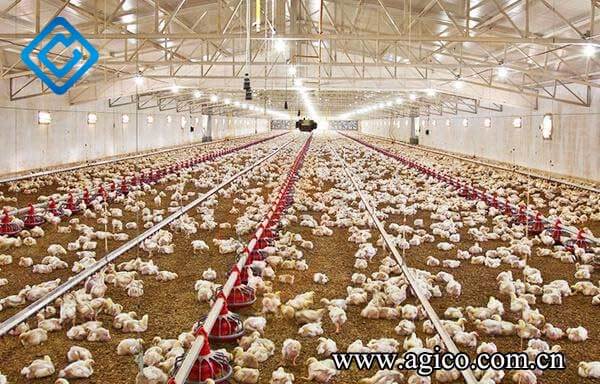
Proper Feeding and Drinking Equipment
Feeding and drinking equipment should be arranged to suit the house dimensions and flock size, so birds can easily reach feed and clean drinking water. The drinking system also needs the correct installation height and water pressure to reduce leaks and wet patches of litter.
Appropriate Stocking Density and Biosecurity
Stocking density should be determined by the breed, bird weight, production stage, environmental control capacity and local regulations, rather than a single fixed standard. Farms should also establish basic biosecurity measures, including control of personnel access, equipment cleaning and disinfection, pest control and appropriate flock cycle management, to reduce the risk of disease transmission.
Is Deep Litter Poultry Farming Suitable for Your Farm?
Deep litter farming can be used for broiler and cage-free layer production at different scales. Whether it is suitable for a particular farm needs to be assessed against the actual production conditions.
Before choosing this system, consider the following:
- Poultry Type: Are you planning to raise broilers or layers? Different birds have different requirements for housing layouts and production facilities.
- Farm Capacity: How many birds do you plan to raise? The flock size affects the floor area and equipment configuration.
- Housing Conditions: Do you have a house suitable for floor-based production, with the necessary moisture protection, drainage and ventilation?
- Bedding Supply: Can you obtain suitable-quality bedding materials locally at a reasonable price and with a reliable supply?
- Management and Market Requirements: Do you have the capacity to manage the house environment and litter? Does your target market have specific requirements for cage-free production?
If you are planning a commercial deep litter poultry house, practical building design and a suitable equipment configuration provide an important foundation for consistent production. AGICO can provide suitable poultry house equipment solutions based on your flock size, production requirements and local conditions.
Frequently Asked Questions About Deep Litter Poultry Farming
Q1. What Is the Difference Between Deep Litter and Free-Range Poultry Farming?
Deep litter farming is an indoor floor-based housing system where birds are raised on bedding materials. Free-range farming requires access to an outdoor area. A poultry house can use a deep litter system without providing outdoor access.
Q2. Which Litter Materials Are Commonly Used in Deep Litter Poultry Farming?
Common bedding materials include wood shavings, rice husks and chopped straw. The choice depends on local availability, cost and material quality. Suitable bedding should be dry, clean and free from visible mold.
Q3. Is the Deep Litter System Suitable for Both Broilers and Layers?
Yes. Deep litter systems are widely used in broiler production and can also be used for cage-free layer farming. However, housing layouts and production facilities differ according to bird type and production requirements.
Q4. How Often Should Litter Be Replaced in a Deep Litter Poultry House?
There is no fixed replacement schedule for every poultry house. It depends on litter condition, moisture levels, flock health, production cycles and local regulations. Broiler houses are commonly assessed between flocks, while layer houses require management plans suited to their longer production periods.